Fall Lawn Seeding and Prep Work in Progress
Fall is genuinely one of the best times to get seeding work done - and that's not just a sales pitch. Cooler temps, more consistent moisture, and less competition from weeds give new grass seed a real chance to take root before winter sets in. The work you put in now directly affects how your yard looks come spring.
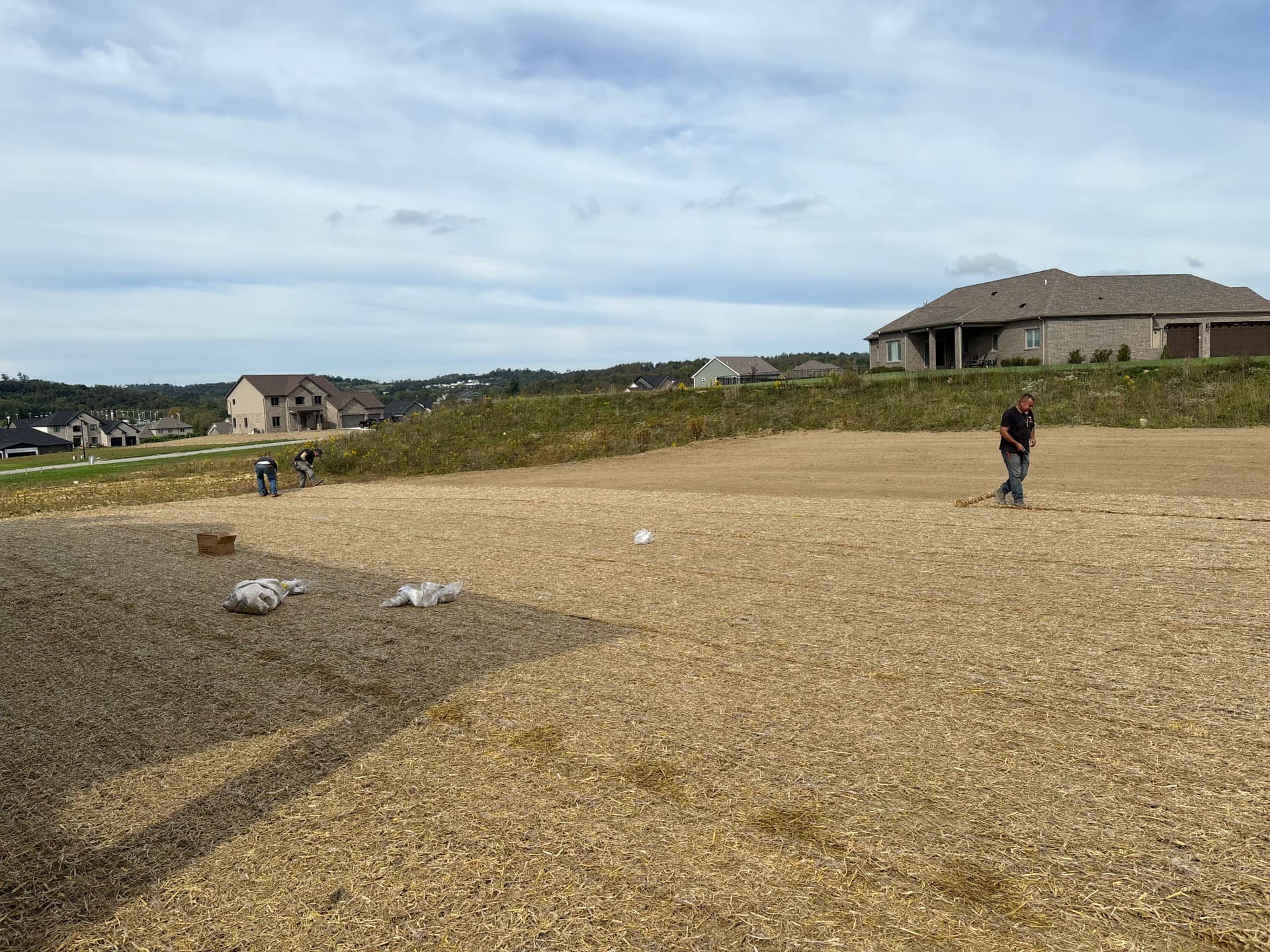
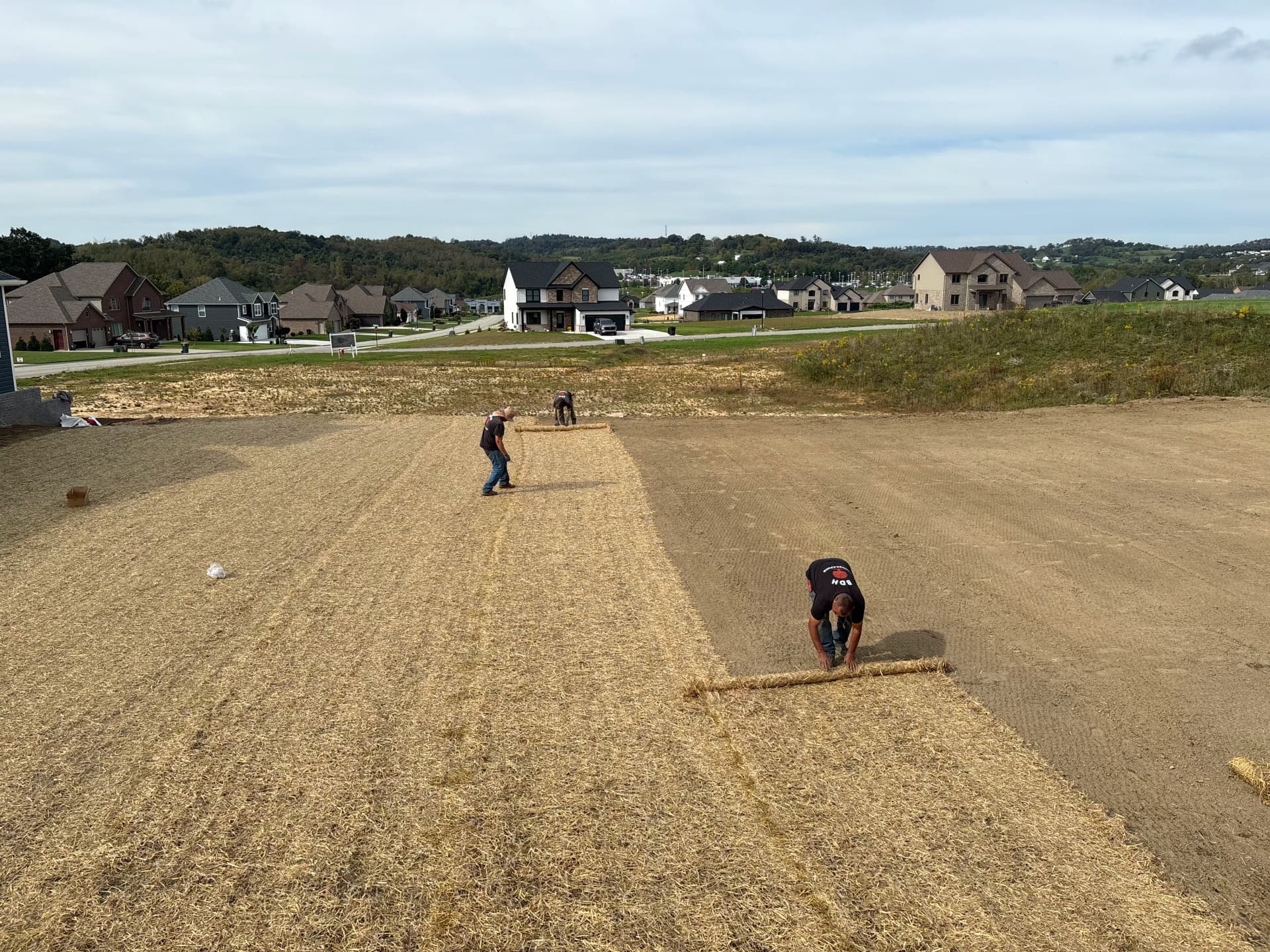
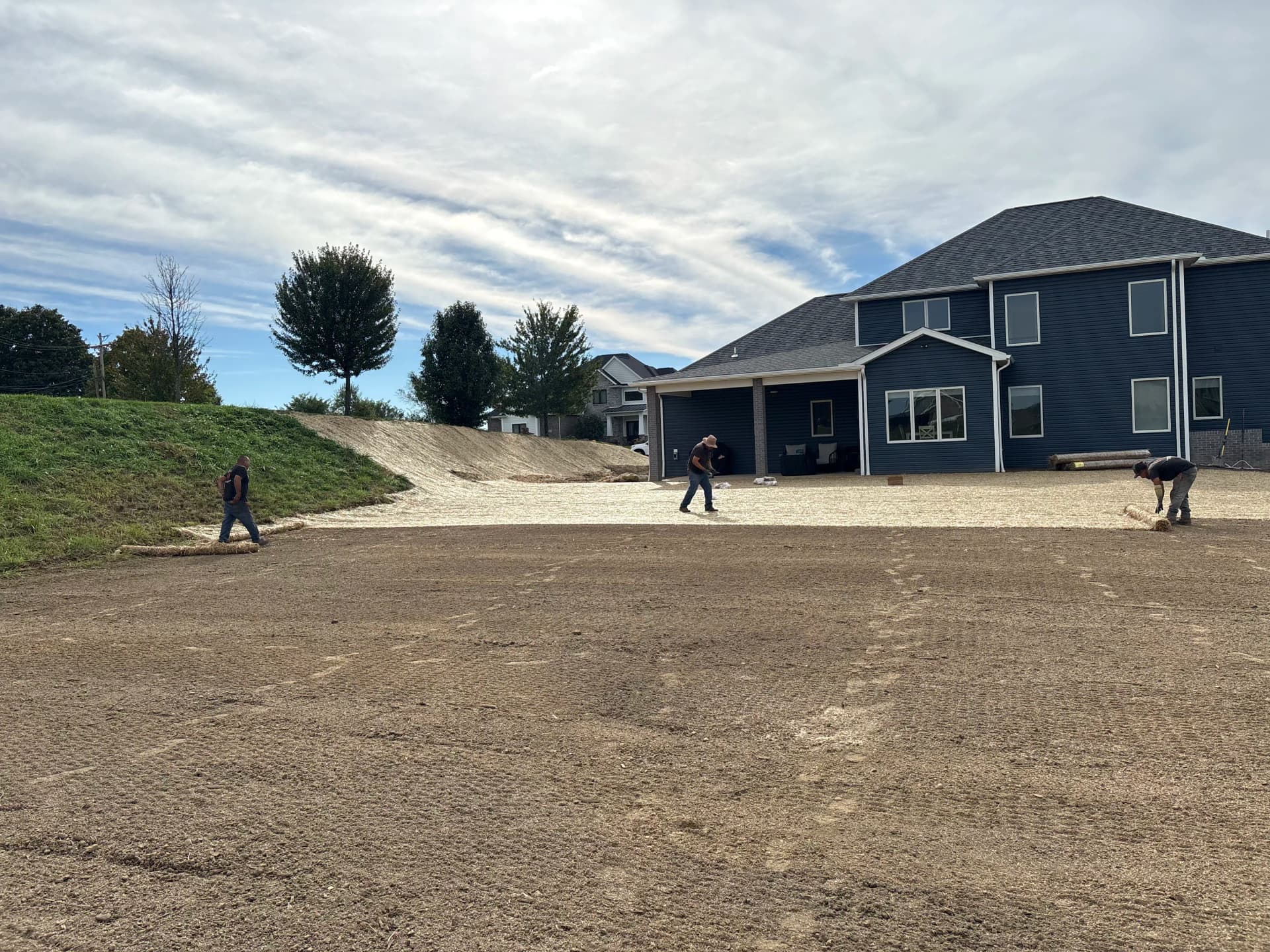
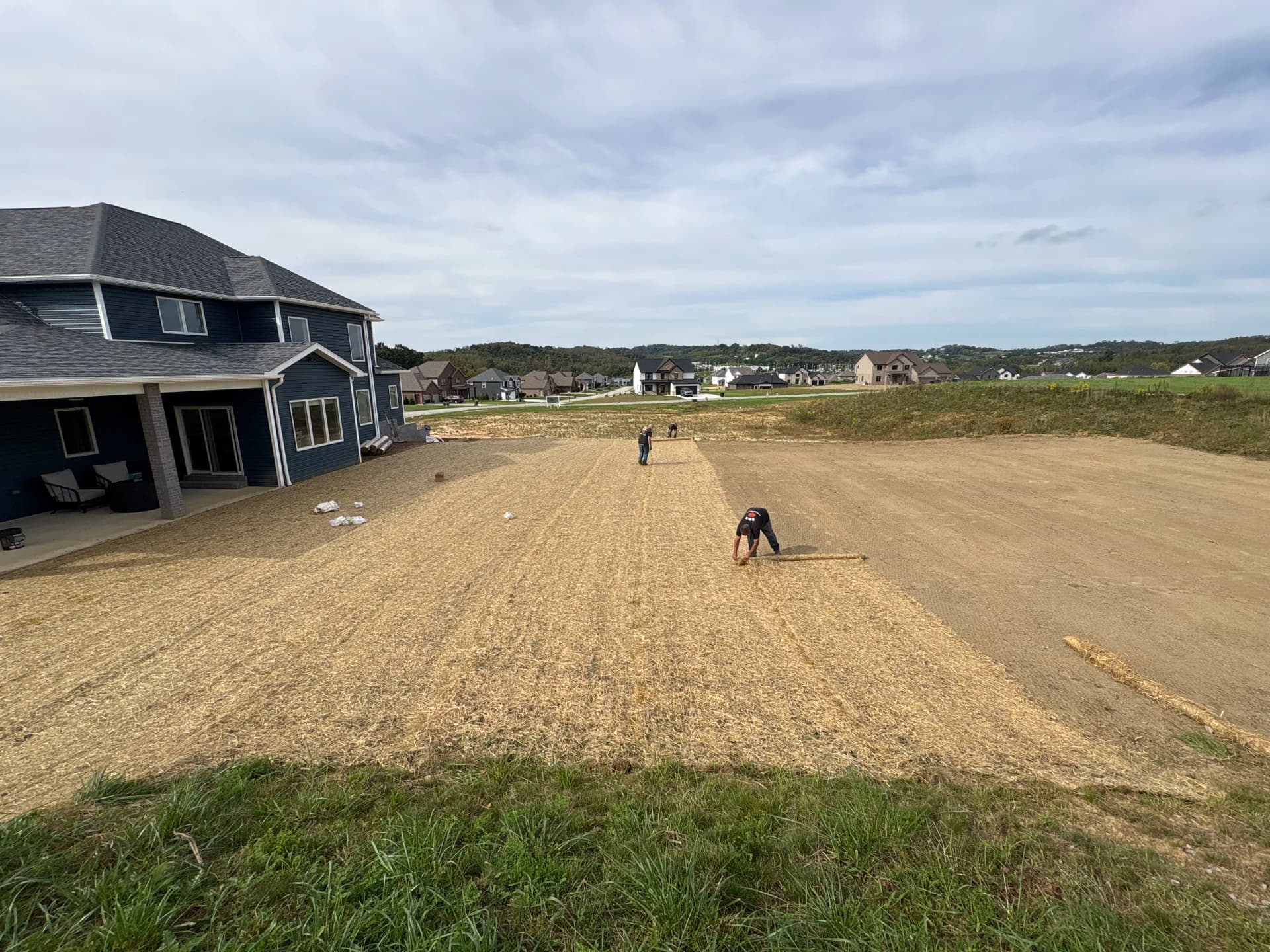
Here's what we're working with on jobs like this - raw, bare ground around a new build. No existing lawn, no established root system, nothing to work with yet. That's exactly where proper ground prep and seeding technique matter most. We grade and prep the soil first, then seed, then lay straw matting across the surface in tight, overlapping rows.
That straw matting step is more important than most people realize. It holds moisture against the seed, protects it from wind and rain erosion, and keeps birds from picking it clean before it ever germinates. On a large open yard like this, skipping that step would mean starting over - and nobody wants that.
The crew rolls out each section by hand, row by row, making sure there are no gaps and that coverage is consistent from edge to edge. It's straightforward work, but doing it right takes attention and a team that actually knows what they're doing. Rush it or cut corners, and the results will show.
Fall planting schedules fill up faster than you'd think. If your yard needs seeding work - whether it's a new build, a bare patch, or a full lawn install - sooner is better than later for getting on the calendar.