Slope Seeding and Erosion Control at a Murrysville Development
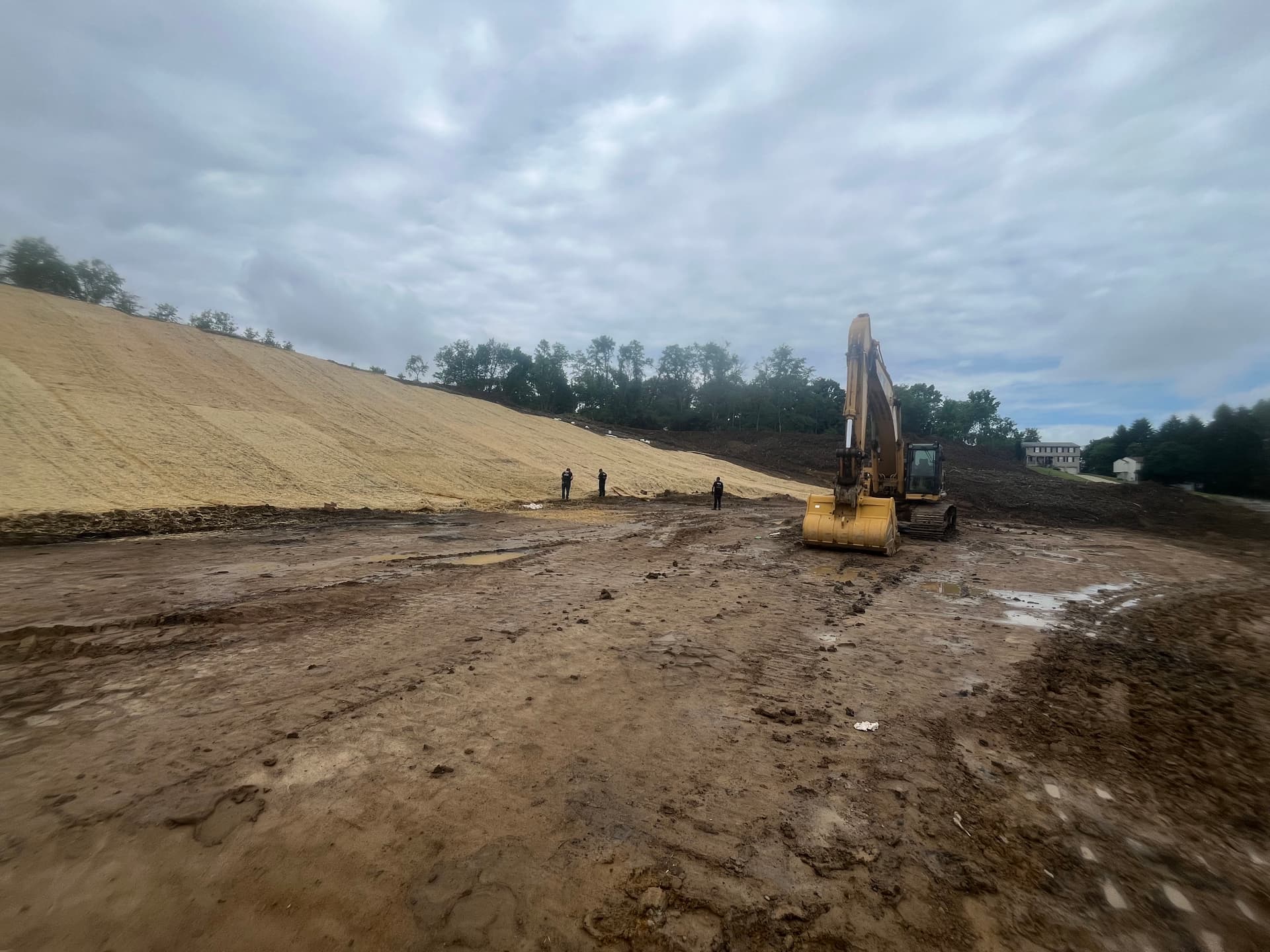
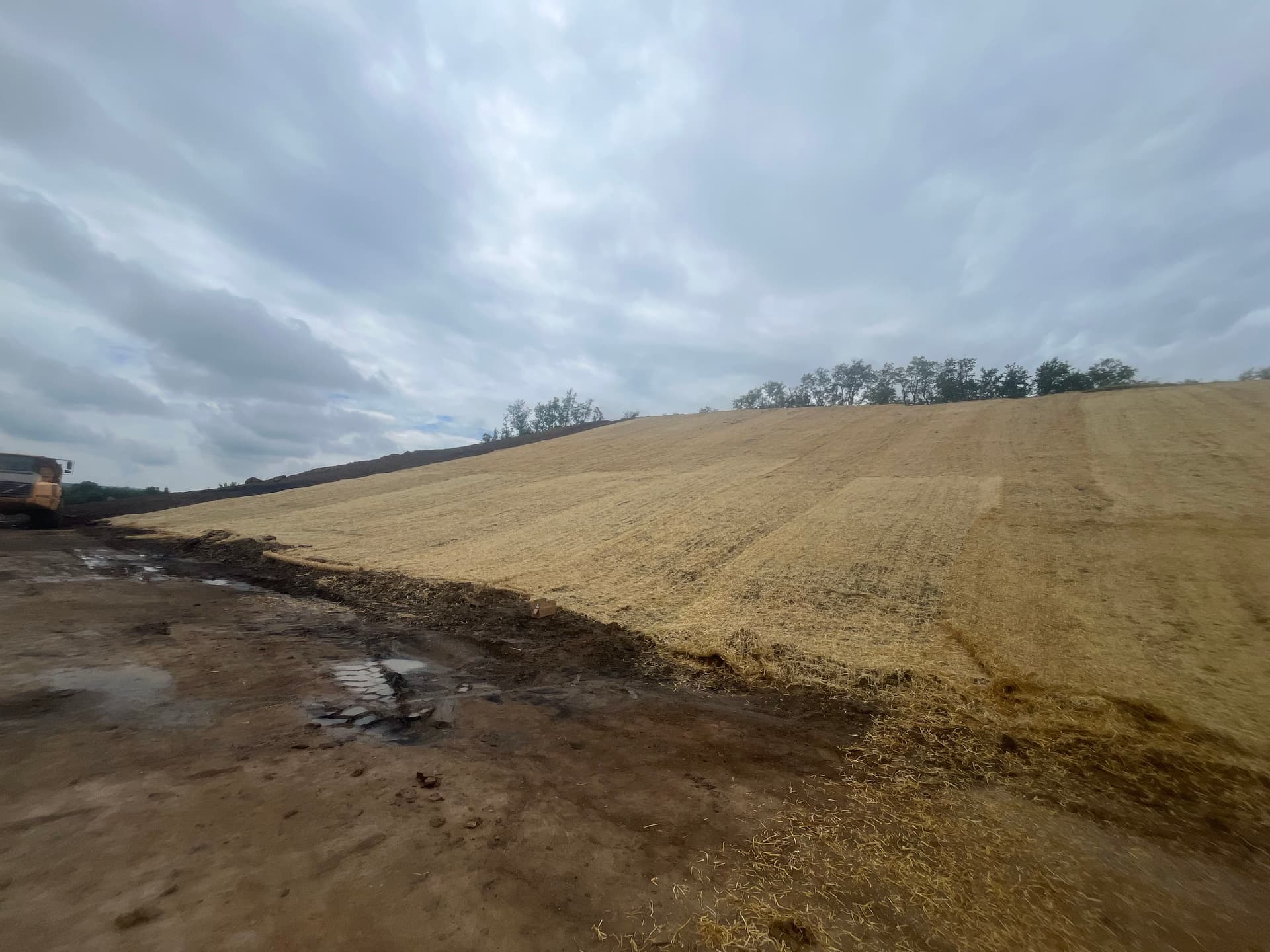
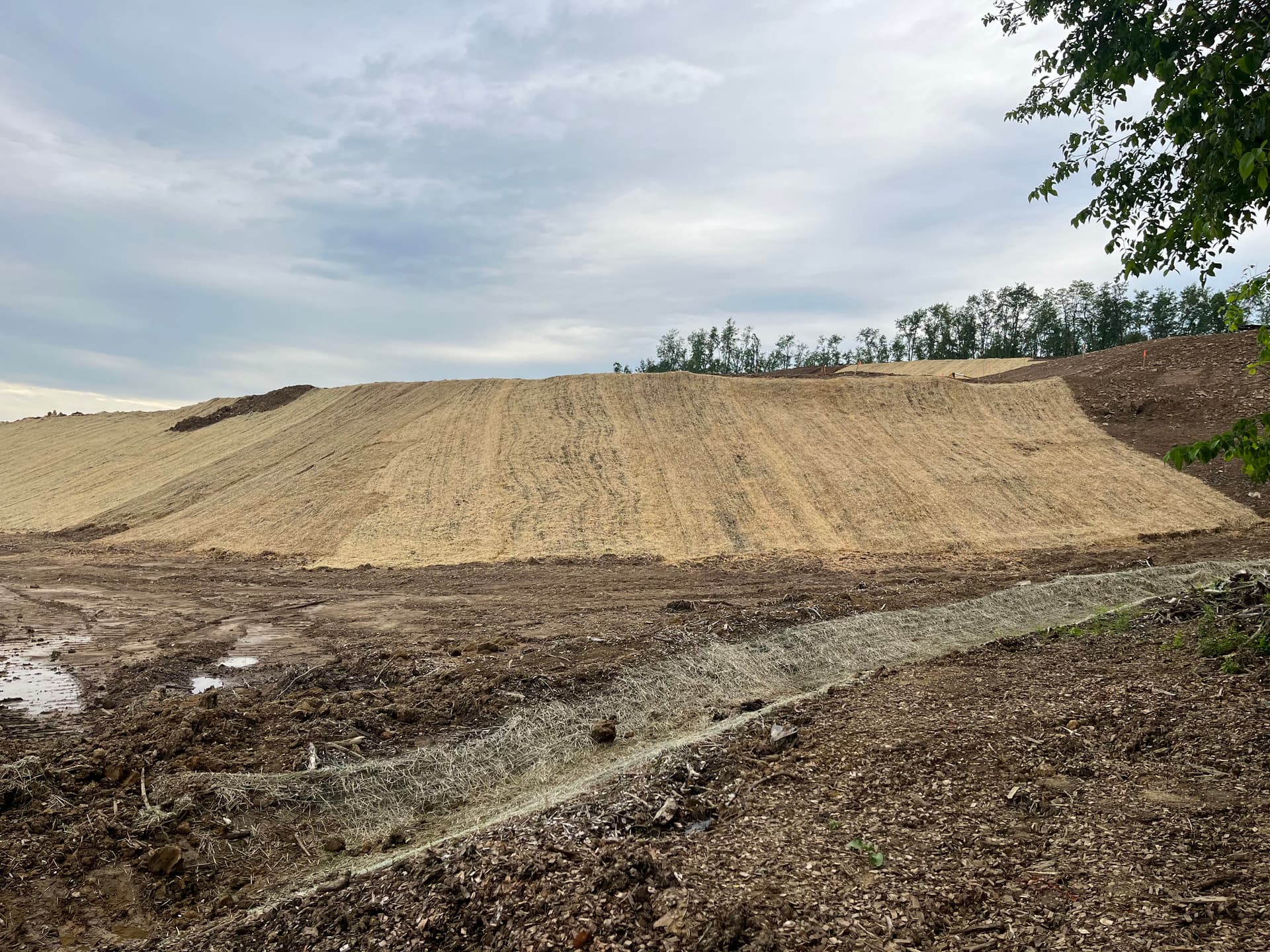
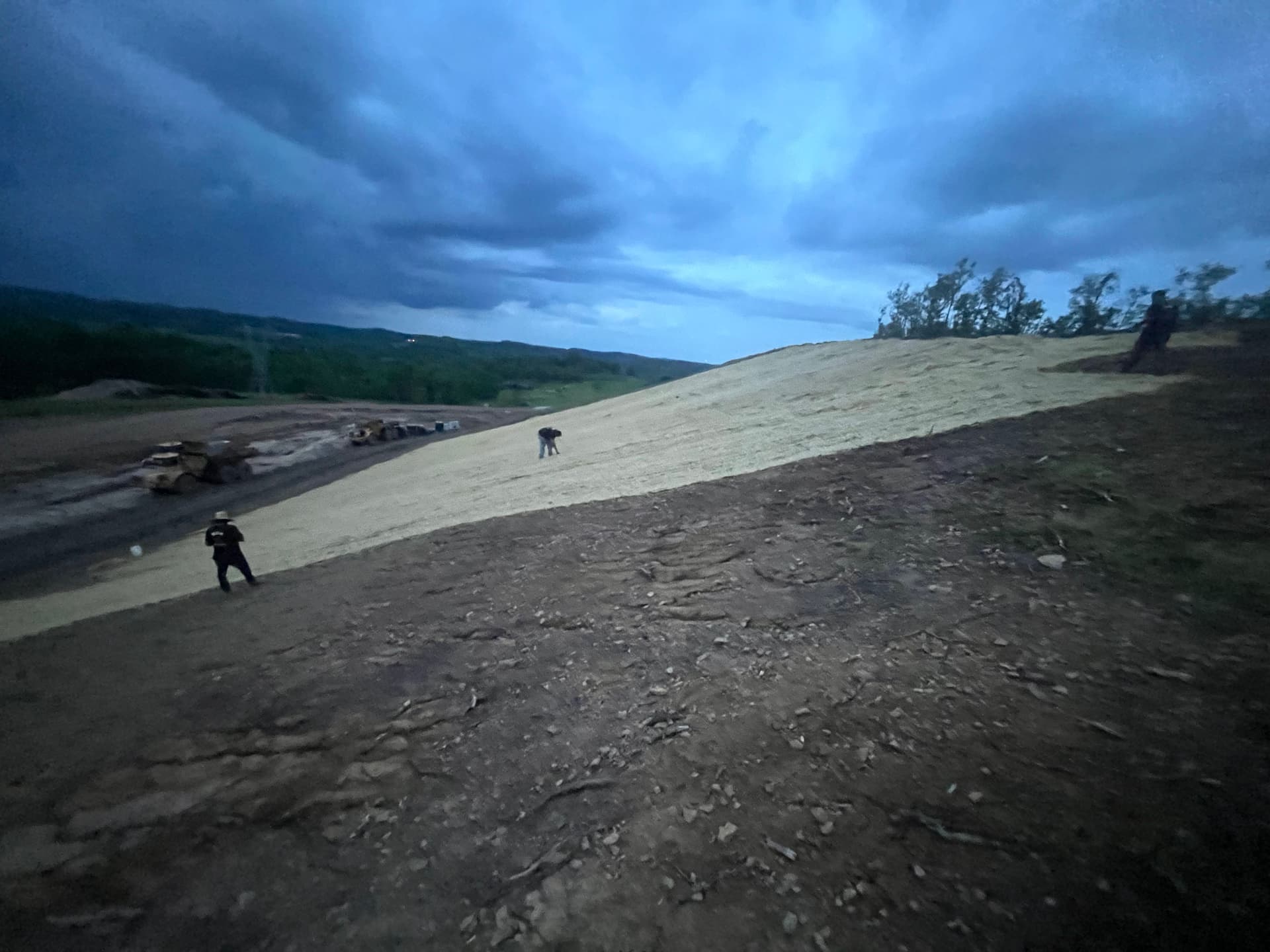
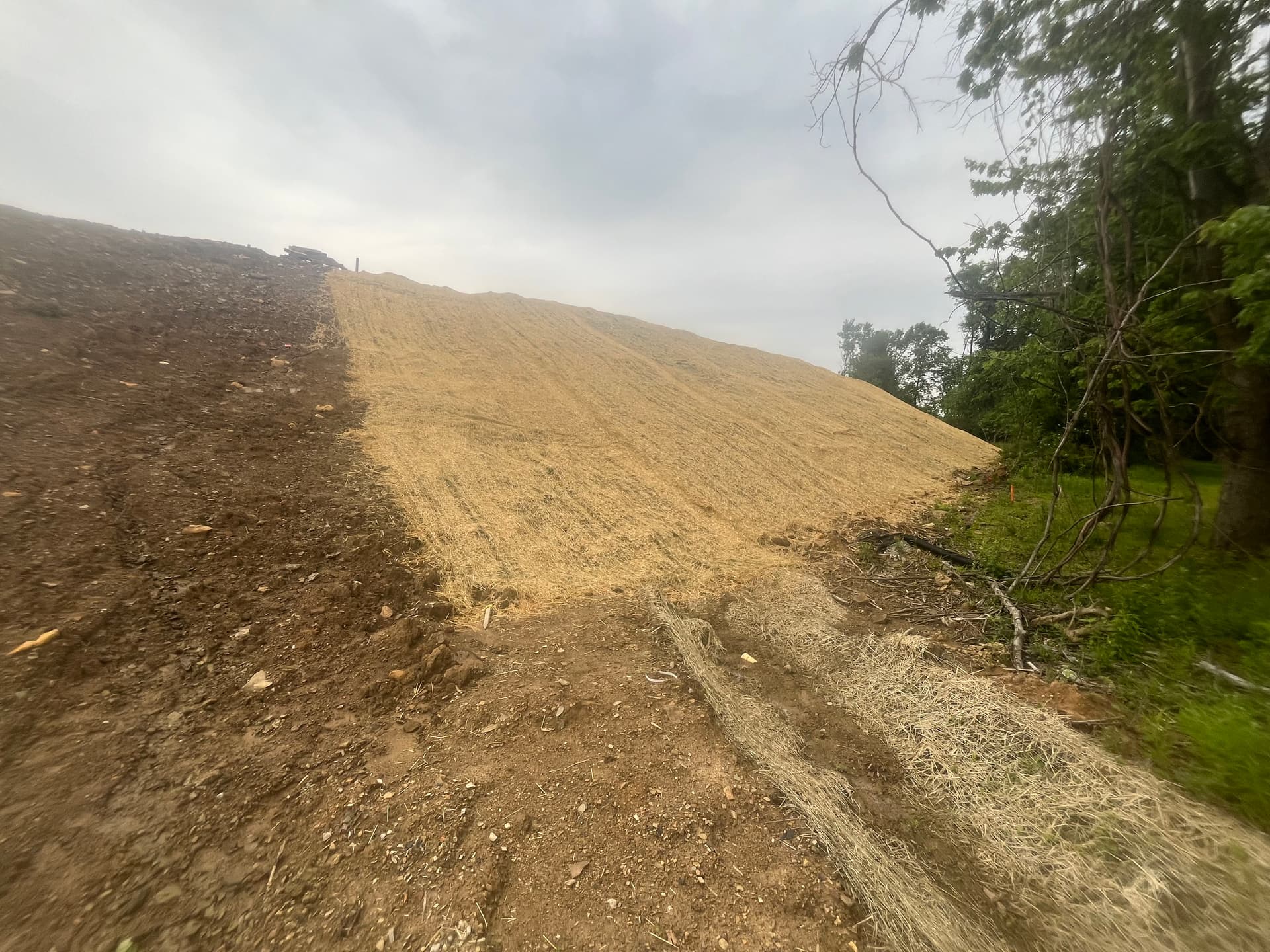
Bare slopes and freshly graded hillsides don't stay put on their own. Without some kind of stabilization in place, even a moderate rain can start washing soil downhill - and on a site this size, that adds up fast. That's exactly the situation we were working with on this new development in Murrysville.
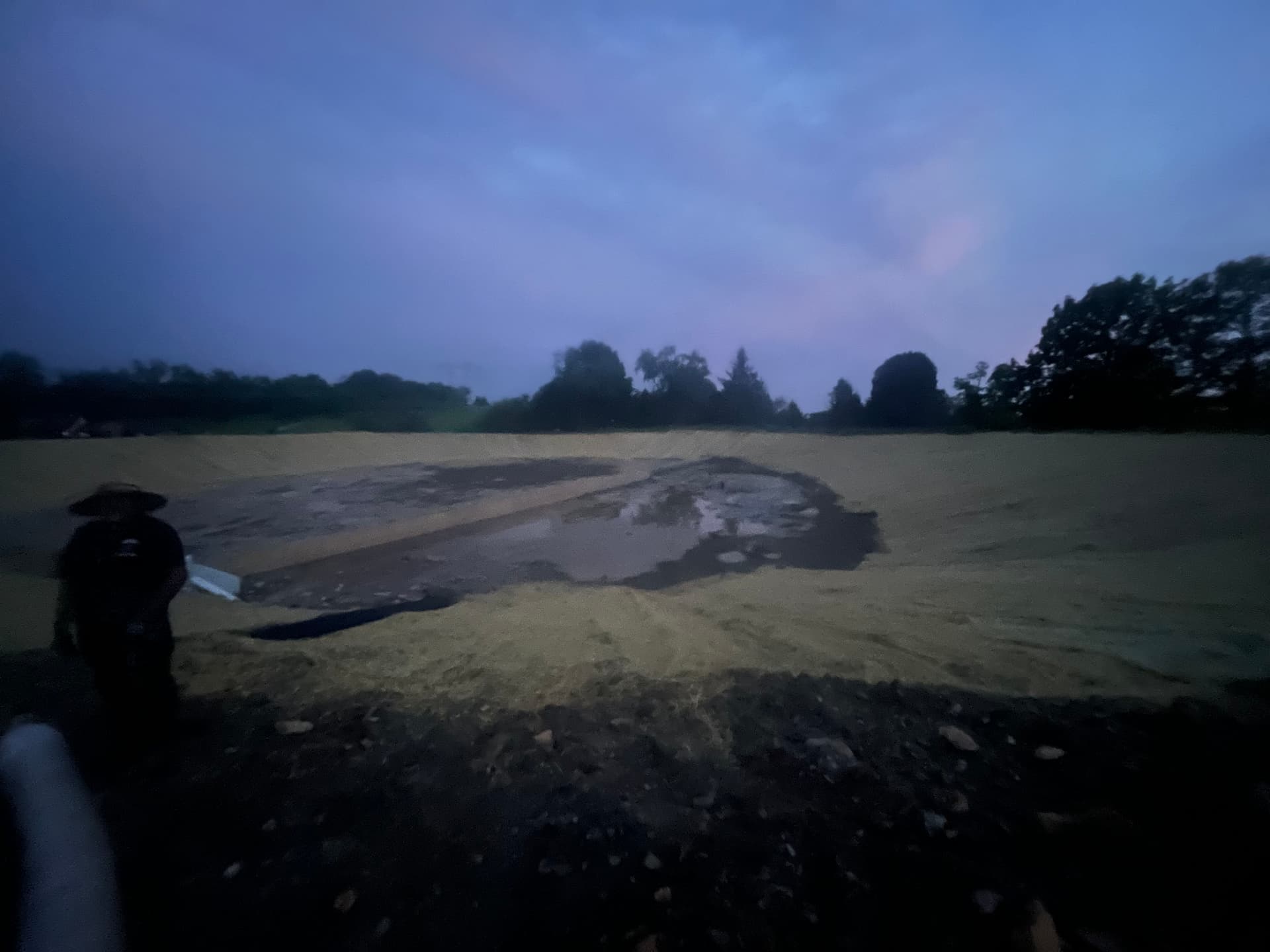
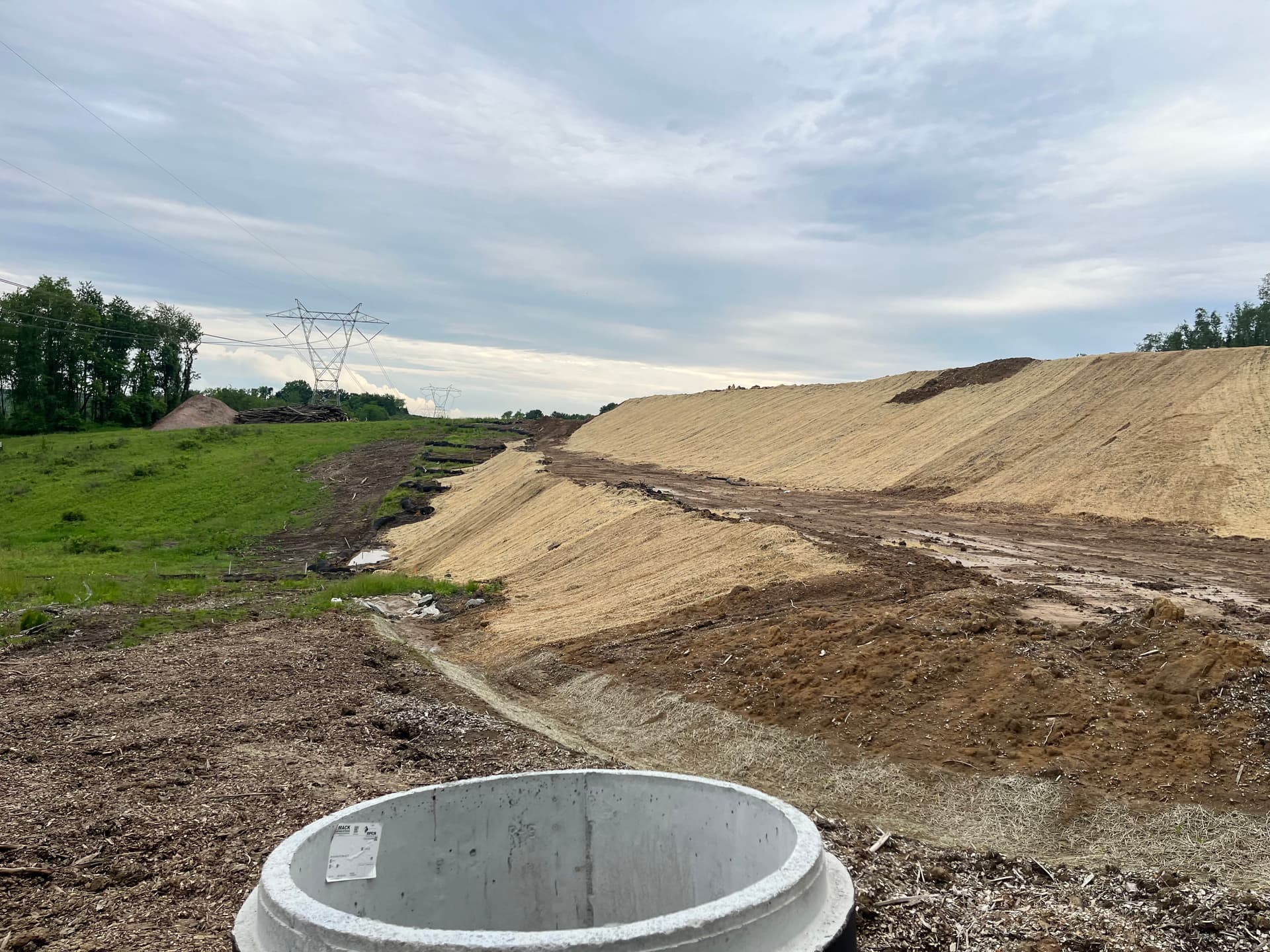
Our crew came in and got to work seeding the slopes and retention pond areas to lock the ground in place before things had a chance to move. You can see the straw erosion control matting laid across the entire face of the slope - that's not just there to look tidy. It holds the seed in contact with the soil, slows surface runoff, and keeps everything in place while the grass establishes underneath.
Getting this done early in the site's life is what makes the difference. Once you've got root systems in the ground, the soil has something to hold onto. Without that, you're constantly fighting sediment migration, washouts near drainage structures, and potential compliance issues. None of that is cheap to deal with after the fact.
This kind of work ties directly into our drainage solutions side of things too. You can see a concrete drainage structure in one of the shots - managing where water goes on a graded site is just as important as stabilizing the ground itself. Slopes, ponds, and drainage all have to work together or you end up chasing problems one after another.
Whether it's a large development site or a backyard slope that keeps washing out every time it rains, the approach is the same - get the right materials down, get it done right, and let the ground do the rest.